The Hidden Causes of Low Endotoxin Recovery
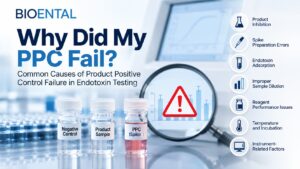
Low endotoxin recovery is one of the most common and frustrating challenges encountered during bacterial endotoxin testing (BET). When Product Positive Control (PPC) recovery falls below acceptance criteria, laboratories often focus on obvious causes such as calculation errors or incorrect spike preparation.
However, many recovery failures originate from less obvious factors that can easily go unnoticed.
Understanding these hidden causes can help laboratories improve method suitability performance, reduce repeat testing, and increase confidence in endotoxin results.
What Is Low Endotoxin Recovery?
In quantitative endotoxin testing methods such as:
- Kinetic Chromogenic
- Kinetic Turbidimetric
- Recombinant Factor C (rFC)
a known amount of endotoxin is added to the sample matrix.
The assay then determines how much of that endotoxin can be recovered.
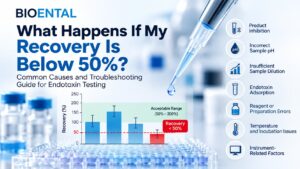
Most validated methods require recovery within an acceptable range, commonly:50 % – 200 %
Recovery below the acceptance limit may indicate that the assay is unable to detect endotoxin accurately in the presence of the product.
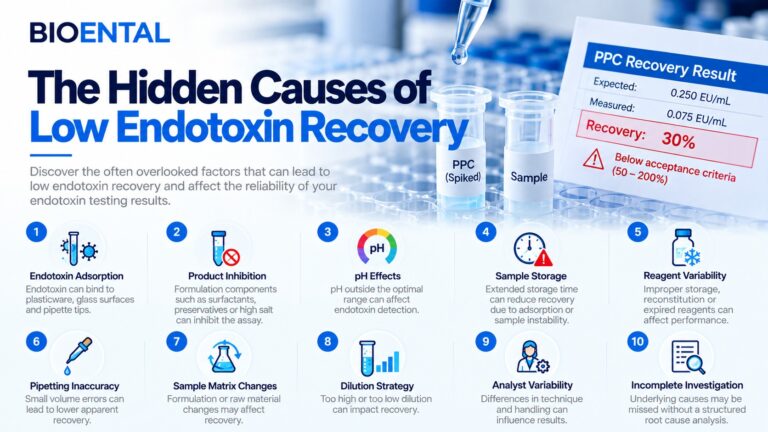
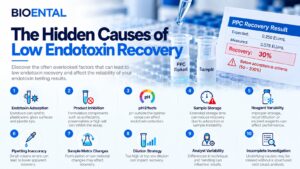
Hidden Cause #1: Endotoxin Adsorption to Laboratory Surfaces
One frequently overlooked cause of low recovery is endotoxin adsorption.
Endotoxin molecules can bind to:
- Plastic tubes
- Pipette tips
- Sample containers
- Glass surfaces
- Microplates
When adsorption occurs, less endotoxin remains available for detection.
The issue becomes particularly significant when working with low endotoxin concentrations.
How to Reduce Risk
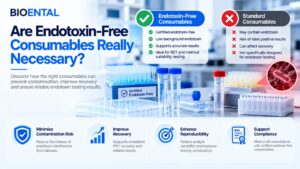
- Use certified endotoxin-free consumables.
- Minimize sample transfers.
- Prepare endotoxin spikes immediately before testing.
- Follow validated handling procedures.
Hidden Cause #2: Subtle Product Inhibition
Many laboratories only investigate inhibition when recovery drops dramatically.
In reality, mild inhibition may gradually reduce recovery without causing complete PPC failure.
Potential inhibitors include:
- Surfactants
- Preservatives
- Chelating agents
- High salt concentrations
- Organic solvents
- Certain biologic formulations
Even low levels of inhibition can affect recovery.
Warning Signs
- Recovery decreases as concentration increases.
- Results vary between dilution levels.
- Recovery trends worsen over time.
Hidden Cause #3: Incorrect pH After Sample Preparation
A sample may have an acceptable pH before preparation but shift outside the optimal range after dilution or reagent addition.
Small pH changes can affect the endotoxin detection reaction.
This issue is commonly overlooked because laboratories often measure pH only during initial method development.
Recommendation
- Verify pH during method suitability studies.
- Reassess pH when formulations change.
- Monitor pH after dilution where appropriate.
Hidden Cause #4: Excessive Sample Storage Time
The timing between sample preparation and testing can influence recovery.
Extended storage may increase:
- Endotoxin adsorption
- Sample instability
- Interaction between endotoxin and product components
The longer a prepared sample remains unused, the greater the potential impact on recovery.
Recommendation
- Test samples as soon as practical after preparation.
- Follow validated hold-time studies.
- Avoid unnecessary delays.
Hidden Cause #5: Reagent Variability
Although endotoxin reagents undergo quality control testing, improper handling can affect performance.
Potential issues include:
- Improper storage temperatures
- Repeated freeze-thaw cycles
- Incorrect reconstitution
- Expired reagents
Subtle reagent degradation may reduce recovery without producing obvious assay failure.
Recommendation
- Monitor storage conditions.
- Follow manufacturer instructions.
- Maintain reagent traceability records.
-
Hidden Cause #6: Inaccurate Pipetting at Low Volumes
Small pipetting errors become more significant when preparing endotoxin spikes.
Minor inaccuracies may lead to:
- Lower apparent recovery
- Increased variability
- Inconsistent PPC results
This issue is particularly relevant for low-volume dilution steps.
Recommendation
- Perform routine pipette calibration.
- Verify analyst competency.
- Use appropriate pipette ranges.
Hidden Cause #7: Sample Matrix Changes Over Time
A product formulation that previously passed method suitability may not always behave the same way.
Factors that may affect recovery include:
- Raw material changes
- Manufacturing changes
- Formulation modifications
- Storage conditions
These changes may alter the interaction between the product and endotoxin.
Recommendation
Review method suitability whenever significant product changes occur.
Hidden Cause #8: Dilution Strategy Selection
Many laboratories assume that increasing dilution automatically improves recovery.
While dilution often reduces inhibition, excessive dilution may introduce other problems.
Potential consequences include:
- Reduced endotoxin concentration
- Increased variability
- Recovery fluctuations
The goal is to identify the optimal dilution rather than simply the highest dilution.
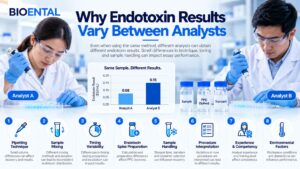
Hidden Cause #9: Analyst-to-Analyst Variability
Different analysts may introduce variability through:
- Mixing technique
- Timing differences
- Pipetting practices
- Sample handling methods
Small procedural differences can contribute to recovery inconsistencies.
Recommendation
- Standardize procedures.
- Conduct periodic competency assessments.
- Review training effectiveness.
Hidden Cause #10: Incomplete Root Cause Investigations
One of the most overlooked causes of recurring low recovery is failure to investigate previous recovery issues thoroughly.
Laboratories may repeat testing without identifying the actual source of interference.
As a result:
- Failures recur
- Resources are wasted
- Trends remain undetected
A structured investigation process can significantly improve long-term assay performance.
Signs That Hidden Recovery Issues May Exist
Consider further investigation if you observe:
✓ Recovery trending downward
✓ Variable PPC performance
✓ Inconsistent results across dilutions
✓ Repeated method suitability challenges
✓ Recovery failures without obvious cause
✓ Increased retesting frequency
Preventing Low Recovery Problems
Laboratories can reduce recovery-related issues by:
- Using endotoxin-free consumables
- Performing thorough method suitability studies
- Monitoring reagent integrity
- Maintaining analyst competency
- Reviewing dilution strategies
- Investigating trends proactively
- Documenting corrective actions
Prevention is often more effective than troubleshooting after failures occur.
Conclusion
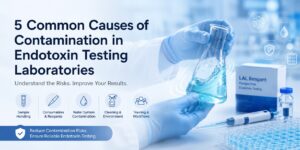
Low endotoxin recovery is not always caused by obvious laboratory errors. Adsorption, subtle inhibition, pH shifts, storage effects, reagent handling, dilution strategy, and analyst variability can all contribute to recovery problems that are easily overlooked.
By understanding these hidden causes and implementing a structured investigation process, laboratories can improve assay reliability, reduce repeat testing, and strengthen confidence in endotoxin test results.
BIOENTAL supports pharmaceutical, biotechnology, medical device, and healthcare laboratories with endotoxin method suitability studies, recovery troubleshooting, recombinant endotoxin technologies, validation support, and endotoxin-free consumables to help achieve reliable and compliant BET results.