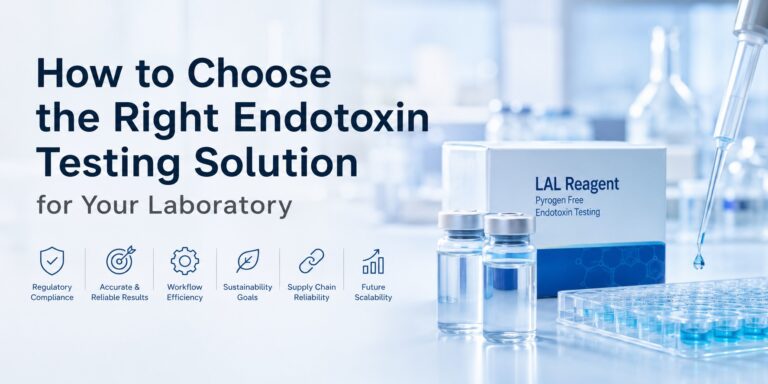
Introduction
Selecting the right endotoxin testing solution is an important decision for pharmaceutical, biotechnology and medical device laboratories. Beyond meeting regulatory requirements, the chosen testing method can influence laboratory efficiency, testing consistency, operational costs and long-term sustainability goals.
With multiple testing technologies available today, including traditional Limulus Amebocyte Lysate (LAL) methods and newer recombinant technologies such as Recombinant Factor C (rFC) and Recombinant Cascade Reagent (rCR), laboratories should carefully evaluate their options before implementation.
This article outlines key factors to consider when choosing an endotoxin testing solution.
Why Choosing the Right Endotoxin Testing Solution Matters
Bacterial Endotoxin Testing (BET) is a critical quality control activity that helps ensure product safety and regulatory compliance.
An effective endotoxin testing solution should support:
- Reliable endotoxin detection
- Regulatory compliance
- Consistent testing performance
- Operational efficiency
- Laboratory scalability
- Sustainable long-term operations
The most suitable solution will vary depending on the laboratory’s products, workflow requirements and business objectives.
1. Regulatory Requirements
Regulatory acceptance remains one of the most important considerations when selecting an endotoxin testing method.
Laboratories should ensure that their chosen approach aligns with:
- United States Pharmacopeia (USP)
- European Pharmacopoeia (EP)
- Japanese Pharmacopoeia (JP)
- FDA requirements
- Internal quality systems
Before implementing any new testing solution, laboratories should assess validation requirements and potential impacts on existing regulatory filings.
2. Testing Accuracy and Reliability
Reliable endotoxin detection is essential for patient safety and product quality.
When evaluating a testing solution, laboratories should consider:
- Method sensitivity
- Reproducibility
- Specificity for endotoxins
- Historical performance
- Validation data
A reliable testing solution helps minimise investigations, repeat testing and operational disruptions.
3. Workflow Efficiency
Laboratories are continually under pressure to improve turnaround times while maintaining compliance.
Workflow considerations may include:
- Sample preparation requirements
- Hands-on operator time
- Testing throughput
- Data management processes
- Ease of implementation
An efficient workflow can help laboratories increase productivity while reducing operational burden.
4. Sustainability Objectives
Many pharmaceutical companies are incorporating environmental and sustainability goals into laboratory operations.
As a result, increasing attention is being given to recombinant endotoxin testing technologies such as:
- Recombinant Factor C (rFC)
- Recombinant Cascade Reagent (rCR)
These animal-free technologies offer alternatives to traditional horseshoe crab-derived LAL reagents and may support broader sustainability initiatives.
5. Supply Chain Reliability
A robust supply chain is essential for uninterrupted laboratory operations.
When evaluating testing solutions, laboratories may consider:
- Availability of reagents
- Supplier reliability
- Long-term product support
- Technical support capabilities
- Consistency of supply
Reliable access to testing materials helps reduce operational risk and unexpected disruptions.
6. Consumables and Supporting Materials
The testing method itself is only one part of a successful endotoxin testing programme.
Laboratories should also evaluate:
- Endotoxin-free tubes
- Pyrogen-free pipette tips
- BET water
- Sample containers
- Validation materials
Suitable consumables can contribute to more consistent workflows and reduce unnecessary troubleshooting.
7. Future Scalability
As organisations grow, laboratory requirements often change.
Questions to consider include:
- Will testing volumes increase?
- Will automation be required?
- Will additional products be introduced?
- Will sustainability goals evolve?
Selecting a solution that supports future growth can help reduce the need for major workflow changes later.
Common Mistakes When Selecting an Endotoxin Testing Solution
Some laboratories focus primarily on reagent cost when comparing solutions.
However, a lower initial cost may not always deliver the best overall value if it leads to:
- Additional investigations
- Repeat testing
- Workflow inefficiencies
- Increased training requirements
- Long-term operational challenges
A comprehensive evaluation should consider both direct and indirect costs.
How BIOENTAL Supports Endotoxin Testing Laboratories
BIOENTAL works with pharmaceutical, biotechnology and microbiology laboratories to support effective endotoxin testing workflows.
Our support includes:
- Endotoxin testing consumables
- Technical consultation
- Workflow optimisation
- Validation support
- Evaluation of LAL, rFC and rCR technologies
We aim to help laboratories identify practical solutions that align with their quality, compliance and operational objectives.
Conclusion
Choosing the right endotoxin testing solution involves more than simply selecting a testing method. Laboratories should consider regulatory requirements, workflow efficiency, sustainability goals, supply chain reliability and long-term scalability.
By taking a structured approach to evaluation, laboratories can implement endotoxin testing solutions that support consistent performance, regulatory compliance and operational success.
For laboratories interested in discussing endotoxin testing workflows or evaluating suitable consumables and technologies, BIOENTAL would be pleased to support a discussion.
Contact BIOENTAL
Have a question or need assistance? Our team is here to help. Feel free to reach out anytime.
Continue Learning
Recommended guides, troubleshooting resources, and validation insights for pharmaceutical, biotechnology, and medical device laboratories.