BIOENTAL

Quantitative LAL Technologies

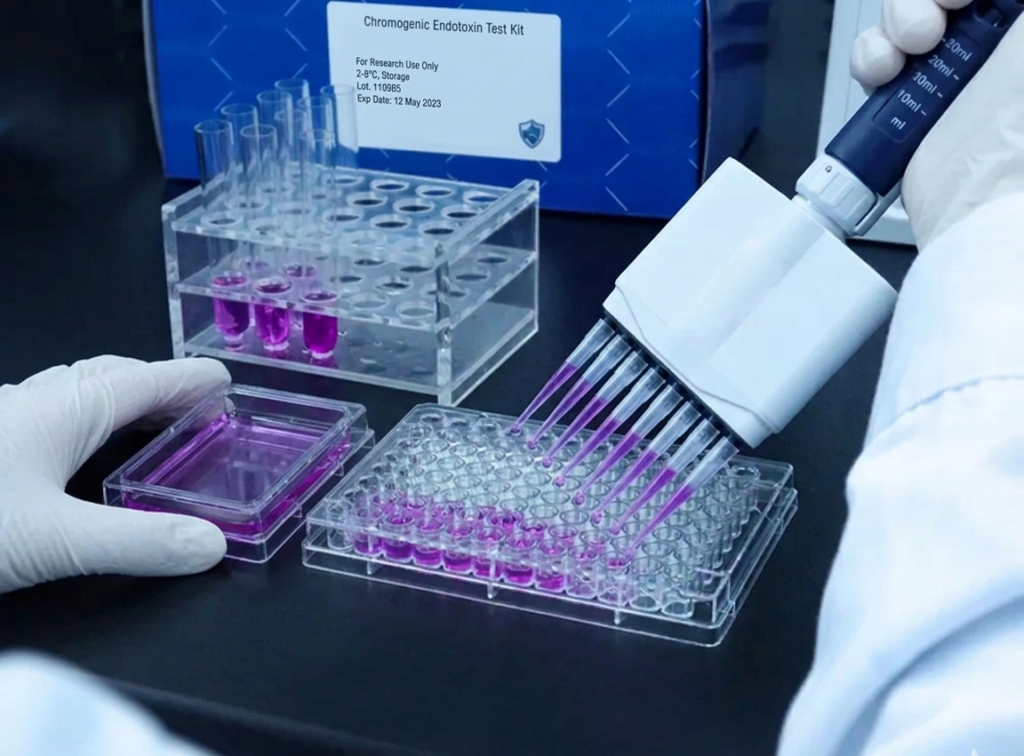
Deliver accurate, reproducible, and regulatory-compliant bacterial endotoxin testing with BIOENTAL's portfolio of quantitative LAL technologies. From routine quality control to complex biologics testing, our validated assays and endotoxin-free consumables help laboratories achieve dependable results with confidence.

Why Quantitative LAL Testing?

  • Accurate and reproducible endotoxin measurement
  • High sensitivity for critical pharmaceutical applications
  • Quantitative results that support product release decisions
  • Compatible with automated laboratory workflows
  • Suitable for routine quality control and validation studies
  • Supports compliance with global regulatory expectations

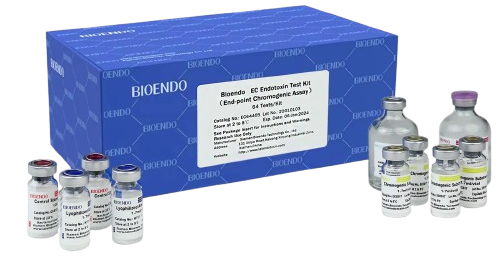
Measures colour intensity after the reaction is stopped.
Results are read at a single time point.

Benefits

  • High sensitivity
  • Simple workflow
  • Cost-effective
  • Suitable for routine testing

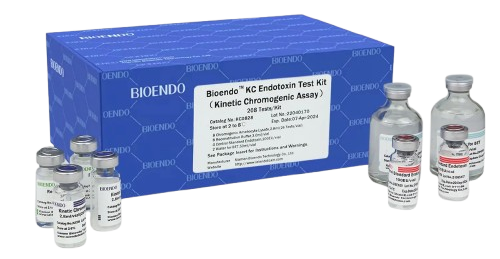
Measures colour development over time to calculate endotoxin concentration kinetically.

Benefits

  • Very high sensitivity
  • Wide dynamic range
  • Ideal for automation
  • Excellent accuracy & precision

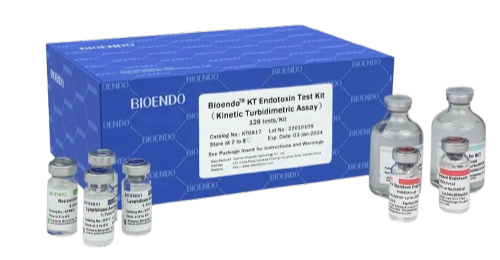
Measures increase in turbidity caused by clot formation over time.

Benefits

  • Fast and robust
  • High throughput
  • Ideal for water testing
  • Automated friendly


Feature

Animal
Source


Mechanism


Detection
Method

β-Glucan
Interference

Reader Compatibility

Transition Effort

Lot-to-Lot Variability

Sensitivity

USP Status

Best For

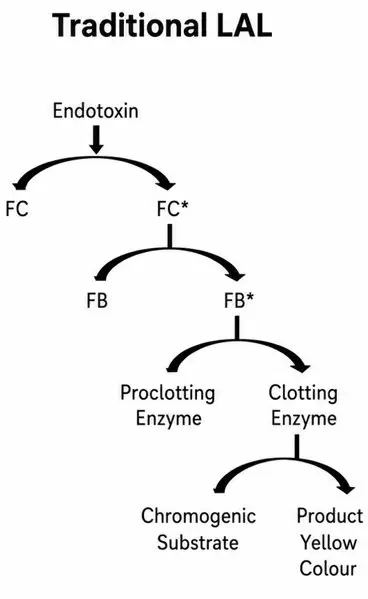
Mechanism of Action

Yes (Horseshoe
crab)

Full natural
cascade

Kinetic
Chromogenic /
others


Yes (Factor G)


Standard absorbance

N/A

Higher

Excellent

<85>

Legacy validated methods

LAL Cascade


No

Recombinant full
cascade


Kinetic
Chromogenic


No


Standard absorbance

Minimal

Low

Excellent

<86>

Seamless switch

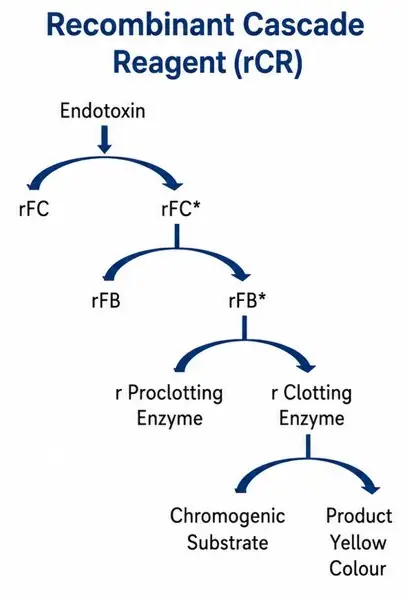
rCR Cascade


No

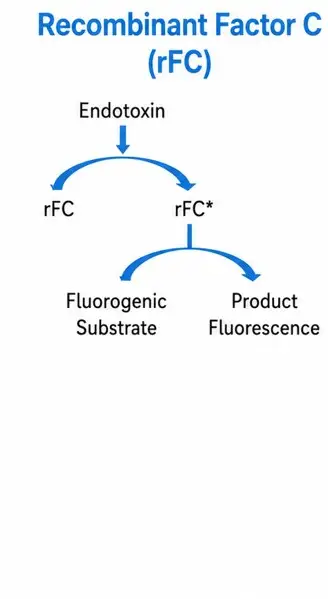
Single
Factor C

Typically
Endpoint
Fluorescence


No

Fluorescence reader needed

Moderate

Low

Excellent / Often Superior

<86>

Maximum specificity

rFC Cascade

Feature

Measurement Principle

Quantitative

Sensitivity

Dynamic Range

Throughput

Automation

Time to Result


Typical Applications

Detection Method

Wavelength

Standard Curve

Regulatory Acceptance

End-Point Chromogenic

Colour intensity at end point

Yes

High

Medium

Medium

Medium

Moderate

Pharmaceuticals, Medical Devices, Water Systems

Spectrophotometer / Microplate Reader

405 nm

Yes

Widely Accepted

Kinetic Chromogenic

Rate of colour development over time

Yes

Very High

Wide

High

High

Moderate

Biologics, Injectables, Complex Matrices, Pharmaceuticals

Kinetic Microplate Reader

405 nm

Yes

Widely Accepted

Kinetic Turbidimetric

Increase in turbidity over time

Yes

High

Wide

High

High

Fast

Water Systems, In-process Testing, Manufacturing QC

Turbidimetric Reader

.....

Yes

Widely Accepted

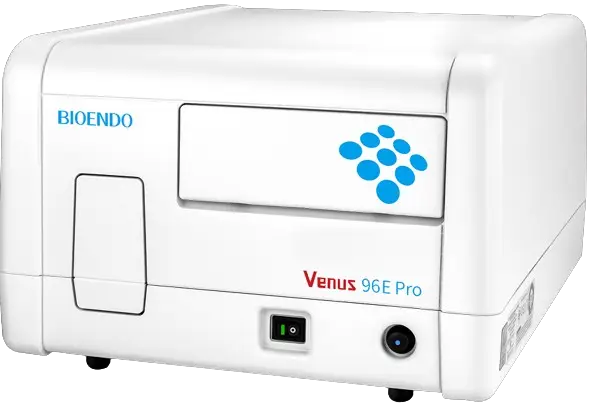
Venus 96E Pro for Quantitative LAL Assays

Venus 96E Pro
  • rCR (Recombinant Cascade Reagent) – The Closest Mimic to Traditional LAL
  • rCR reagents contain three recombinant proteins: Factor C, Factor B, and proclotting enzyme. This recreates the full enzymatic cascade of natural LAL/TAL for kinetic chromogenic detection.

Key Features:

  • Kinetic chromogenic method (absorbance at 405 nm) — same as your existing LAL protocols.
  • Compatible with standard incubating microplate readers and software (no new capital investment).
  • High sensitivity (typically 0.005 EU/mL or better).
  • Real-time kinetic monitoring for quantitative results.

Strengths:

  • Seamless transition from LAL workflows.
  • Full cascade amplification for robust signal.
  • No β-glucan false positives.
  • Reduced lot-to-lot variability compared to natural LAL.
  • Excellent performance in complex matrices.

Considerations:

  • Product-specific verification under USP <86>.
  • Ideal For: Labs wanting minimal method change while going fully animal-free. Perfect for pharma water testing, parenterals, biologics, and medical devices.

COMMON APPLICATIONS

  • Pharmaceutical Products
    Endotoxin testing for injectables, APIs and finished products.

  • Water Systems
    Purified Water (PW) and Water for Injection (WFI) monitoring.

  • Medical Devices
    Testing of devices and components for endotoxin contamination.

  • Biologics
    Suitable for proteins, vaccines and cell therapy products.

  • Research
    Endotoxin quantification in laboratory and R&D studies.

  • Contract Laboratories
    Reliable methods for routine testing services.

Medical Devices

HOW TO CHOOSE THE RIGHT METHOD

Choose End-Point Chromogenic

When

  • Budget is a priority
  • Routine testing
  • Moderate sample volume

Choose Kinetic Chromogenic

When

  • Maximum sensitivity is required
  • Automated laboratories
  • Biologics and complex matrices

Choose Kinetic Turbidimetric

When

  • High throughput testing
  • Water monitoring
  • Manufacturing QC environments

NEED HELP SELECTING THE RIGHT METHOD?

Our technical team is ready to support you with method selection, validation and implementation.