Introduction
Bacterial Endotoxin Testing (BET) is one of the most sensitive quality control procedures performed in pharmaceutical, biotechnology and medical device laboratories. Because endotoxin testing is designed to detect extremely low levels of bacterial endotoxins, even minor contamination can affect results and lead to unnecessary investigations, repeat testing and operational delays.
While validated methods and qualified personnel are essential, contamination risks can still arise during routine laboratory operations.
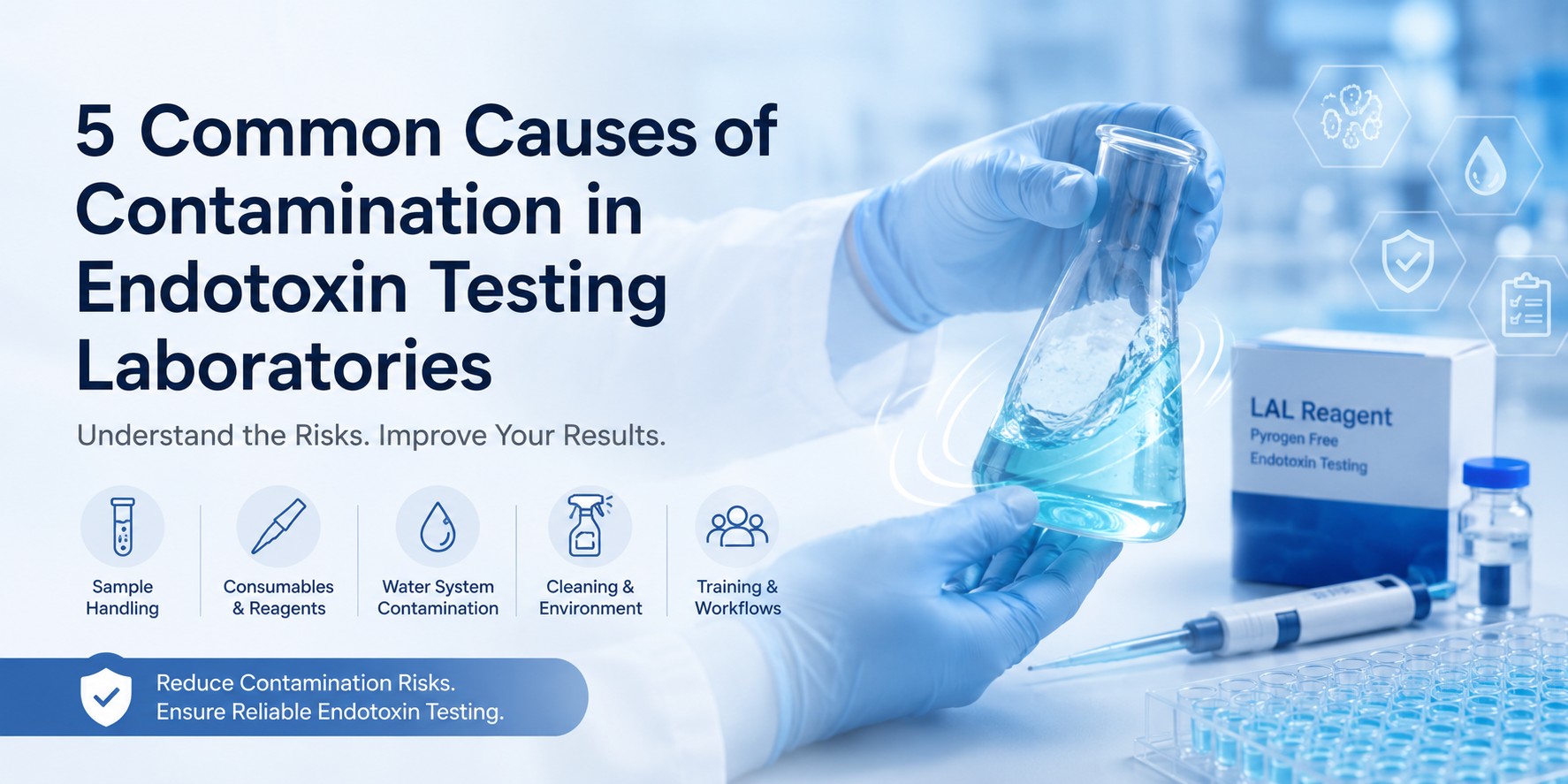
This article explores five common causes of contamination in endotoxin testing laboratories and practical steps that can help reduce testing variability.
Why Contamination Matters in BET
Unlike many routine laboratory tests, endotoxin testing is highly sensitive to contamination from external sources.
Contamination may lead to:
- Unexpected positive results
- Out-of-specification (OOS) investigations
- Repeat testing
- Increased laboratory workload
- Product release delays
- Additional operational costs
Identifying and controlling contamination risks is therefore an important part of maintaining reliable and consistent BET workflows.
1. Poor Sample Handling Practices
One of the most common sources of contamination occurs during sample preparation and handling.
Examples include:
- Touching critical surfaces unnecessarily
- Improper sample transfers
- Inconsistent handling techniques
- Failure to follow established procedures
Even when testing materials are suitable, poor handling practices can introduce contaminants that affect results.
Best Practice
- Follow standardised handling procedures
- Minimise unnecessary sample exposure
- Ensure personnel are properly trained
- Maintain good aseptic techniques
2. Unsuitable or Inconsistent Consumables
Consumables play an important role in endotoxin-sensitive workflows.
Items such as:
- Sample tubes
- Pipette tips
- Containers
- Reaction vessels
- Water used for testing
should be appropriate for endotoxin testing applications.
Variability between consumables or unsuitable materials may contribute to inconsistent results and additional troubleshooting efforts.
Best Practice
- Use endotoxin-critical consumables suitable for BET
- Standardise consumables where possible
- Source materials from reliable suppliers
- Evaluate alternative consumables before implementation
3. Water System Contamination
Water is frequently used in endotoxin testing workflows for reagent preparation, dilution and sample handling.
Poorly maintained water systems can become a source of endotoxin contamination due to bacterial growth and biofilm formation.
Even where microbial levels appear acceptable, endotoxins may still be present.
Best Practice
- Monitor water quality routinely
- Maintain water system controls
- Follow established cleaning and maintenance procedures
- Investigate unexpected trends promptly
4. Inadequate Cleaning and Environmental Controls
Laboratory environments can contribute to contamination risks if cleaning and environmental controls are not consistently maintained.
Potential sources include:
- Work surfaces
- Equipment
- Storage areas
- Airborne contamination
- Shared laboratory tools
Environmental contamination can introduce variability into testing workflows and complicate investigations.
Best Practice
- Establish routine cleaning schedules
- Maintain controlled work environments
- Verify cleaning effectiveness
- Monitor critical laboratory areas
5. Insufficient Training and Workflow Standardisation
Even with suitable equipment and consumables, inconsistent practices between operators can introduce variability into testing outcomes.
Differences in technique, interpretation and workflow execution may affect consistency across testing runs.
Best Practice
- Provide regular training
- Review procedures periodically
- Standardise critical workflow steps
- Encourage continuous improvement initiatives
Reducing Contamination Risks Through Standardisation
Many contamination issues can be reduced through a combination of:
- Standardised consumables
- Controlled workflows
- Personnel training
- Suitable environmental controls
- Routine monitoring activities
By reducing unnecessary variability, laboratories can improve testing consistency and minimise repeat testing efforts.
How BIOENTAL Supports BET Laboratories
BIOENTAL works with pharmaceutical, biotechnology and microbiology laboratories to support reliable bacterial endotoxin testing workflows.
Our support includes:
- Endotoxin testing consumables
- BET workflow consultation
- Technical guidance
- Validation support
- Laboratory efficiency improvements
We understand the practical challenges laboratories face in maintaining consistent endotoxin testing outcomes and strive to support quality teams through suitable solutions and technical expertise.
Conclusion
Contamination remains one of the most common challenges in bacterial endotoxin testing laboratories. While no single measure can eliminate contamination risks entirely, a combination of good laboratory practices, suitable consumables, effective environmental controls and workflow standardisation can significantly improve testing reliability.
By proactively identifying contamination risks and implementing appropriate controls, laboratories can support more consistent BET results, reduce investigations and improve operational efficiency.
For laboratories interested in evaluating endotoxin-critical consumables or discussing workflow improvements, BIOENTAL would be pleased to support a discussion.
Contact BIOENTAL
Have a question or need assistance? Our team is here to help. Feel free to reach out anytime.
Continue Learning
Recommended guides, troubleshooting resources, and validation insights for pharmaceutical, biotechnology, and medical device laboratories.