Introduction
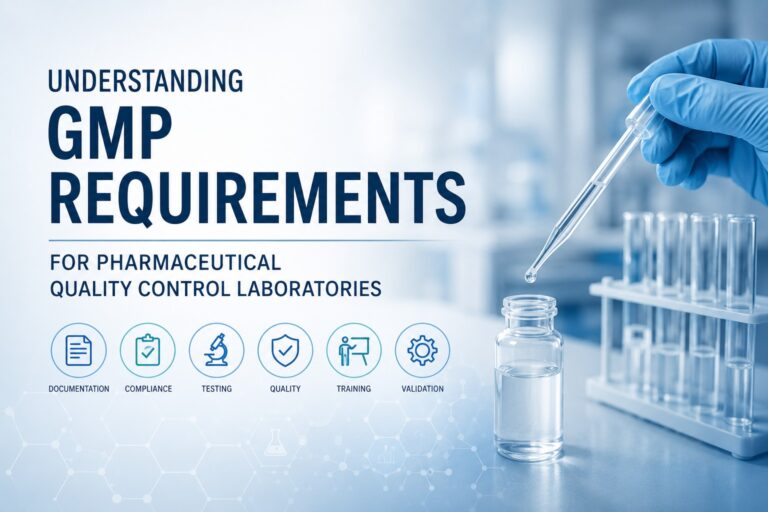
Good Manufacturing Practice (GMP) is the foundation of pharmaceutical quality systems. GMP requirements are designed to ensure that pharmaceutical products are consistently produced, tested and controlled according to established quality standards.
For Quality Control (QC) and microbiology laboratories, GMP compliance plays a critical role in ensuring the reliability, accuracy and integrity of laboratory testing activities. Whether performing bacterial endotoxin testing (BET), microbiological analysis or product release testing, laboratories must operate within a robust GMP framework.
This article explores key GMP requirements for pharmaceutical laboratories and practical steps organisations can take to maintain compliance.
What Is GMP?
Good Manufacturing Practice (GMP) refers to a system of regulations, procedures and controls designed to ensure that pharmaceutical products are consistently safe, effective and of high quality.
GMP requirements are enforced by regulatory authorities worldwide, including:
- U.S. Food and Drug Administration (FDA)
- European Medicines Agency (EMA)
- Pharmaceutical Inspection Co-operation Scheme (PIC/S)
- Health Sciences Authority (HSA) Singapore
- World Health Organization (WHO)
GMP applies not only to manufacturing operations but also to laboratory testing activities that support product quality decisions.
Why GMP Compliance Matters for Laboratories
Laboratory data forms the basis for many critical decisions, including:
- Product release
- Product rejection
- Investigations
- Stability studies
- Process validation
- Regulatory submissions
If laboratory systems are not properly controlled, the reliability of testing results may be questioned.
Non-compliance can potentially result in:
- Regulatory observations
- Warning letters
- Product recalls
- Manufacturing delays
- Increased investigation costs
- Reputational damage
For this reason, maintaining GMP compliance is a key responsibility for all laboratory personnel.
Key GMP Requirements for QC Laboratories
1. Documentation and Record Keeping
One of the most important GMP principles is:
“If it isn’t documented, it didn’t happen.”
Laboratories must maintain accurate, complete and contemporaneous records for all testing activities.
Examples include:
- Standard Operating Procedures (SOPs)
- Test records
- Equipment logs
- Training records
- Investigation reports
- Validation documentation
Proper documentation supports traceability and regulatory compliance.
2. Equipment Qualification and Calibration
Laboratory equipment must be suitable for its intended purpose and maintained in a qualified state.
Examples include:
- Endotoxin readers
- Incubators
- Spectrophotometers
- Balances
- Pipettes
- Water systems
GMP expectations generally include:
- Installation Qualification (IQ)
- Operational Qualification (OQ)
- Performance Qualification (PQ)
- Routine calibration
- Preventive maintenance
Regular monitoring helps ensure testing accuracy and reliability.
3. Personnel Training and Competency
Laboratory personnel must possess the knowledge and skills necessary to perform their assigned tasks.
Training programmes should cover:
- GMP principles
- SOPs
- Testing methods
- Data integrity requirements
- Safety procedures
Competency assessments and refresher training are often used to maintain consistent performance.
4. Data Integrity
Data integrity has become a major focus area during regulatory inspections.
Laboratories should ensure that data is:
- Accurate
- Complete
- Consistent
- Legible
- Contemporaneous
- Original
Commonly referred to as ALCOA+ principles, these expectations help ensure confidence in laboratory results.
5. Method Validation and Verification
Testing methods must be demonstrated to be suitable for their intended purpose.
Examples include:
- Bacterial endotoxin testing
- Microbiological testing
- Chemical analysis
- Environmental monitoring
Validation activities help confirm that testing methods generate reliable and reproducible results.
6. Environmental and Contamination Control
Environmental controls are particularly important in microbiology and endotoxin testing laboratories.
Key areas may include:
- Cleaning procedures
- Environmental monitoring
- Sample handling practices
- Material storage conditions
- Contamination prevention measures
Effective controls help minimise testing variability and reduce investigation rates.
GMP and Bacterial Endotoxin Testing
For laboratories performing bacterial endotoxin testing (BET), GMP compliance extends beyond the testing method itself.
Laboratories often focus on:
- Suitable endotoxin-critical consumables
- Endotoxin-free tubes
- Pyrogen-free pipette tips
- BET water
- Standardised workflows
- Validated testing procedures
Maintaining control over these elements can help support consistent and reliable BET results.
Common GMP Challenges Faced by Laboratories
Many laboratories face challenges such as:
- Increasing regulatory expectations
- Resource limitations
- Manual documentation processes
- Training consistency
- Equipment lifecycle management
- Investigation workloads
Addressing these challenges often requires a combination of quality systems, suitable technologies and continuous improvement initiatives.
How BIOENTAL Supports GMP-Compliant Laboratories
BIOENTAL supports pharmaceutical, biotechnology and microbiology laboratories through:
- Endotoxin testing consumables
- Technical consultation
- Workflow optimisation
- Validation support
- Laboratory efficiency improvements
We understand the importance of maintaining compliant, reliable and efficient testing workflows in regulated laboratory environments.
Conclusion
GMP compliance is essential for pharmaceutical quality control laboratories. Through effective documentation, validated methods, qualified equipment, trained personnel and robust quality systems, laboratories can support reliable testing outcomes and regulatory compliance.
As regulatory expectations continue to evolve, laboratories that prioritise GMP principles will be better positioned to maintain product quality, patient safety and operational excellence.
Contact BIOENTAL
Have a question or need assistance? Our team is here to help. Feel free to reach out anytime.
Continue Learning
Recommended guides, troubleshooting resources, and validation insights for pharmaceutical, biotechnology, and medical device laboratories.