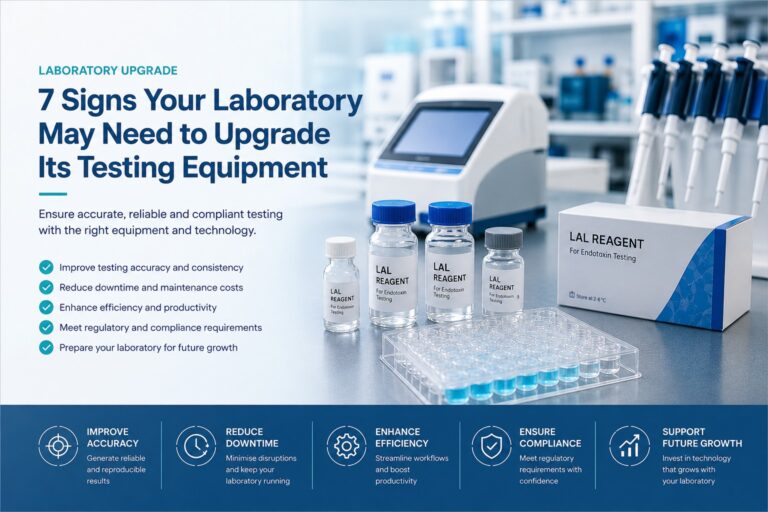
7 Signs Your Laboratory May Need to Upgrade Its Testing Equipment
Introduction
Laboratory equipment plays a critical role in ensuring accurate, reliable and compliant testing results. However, as equipment ages, laboratories may begin to experience performance issues that affect productivity, testing consistency and operational efficiency.
While many organisations focus on maintaining existing systems for as long as possible, delaying equipment upgrades can sometimes result in higher long-term costs, increased downtime and greater compliance risks.
This article highlights seven common signs that your laboratory may benefit from upgrading its testing equipment.
Why Laboratory Equipment Matters
Quality control and microbiology laboratories depend on equipment to generate reliable data that supports critical decisions, including:
-
- Product release
-
- Quality investigations
-
- Validation activities
-
- Regulatory submissions
-
- Stability studies
When equipment performance declines, testing quality and laboratory efficiency may be affected.
1. Frequent Equipment Downtime
One of the clearest warning signs is increasing equipment downtime.
If your laboratory regularly experiences:
-
- Unexpected breakdowns
-
- Service interruptions
-
- Delayed testing schedules
-
- Extended repair periods
it may be time to evaluate whether replacement is more cost-effective than continued maintenance.
Impact
-
- Delayed product release
-
- Reduced productivity
-
- Increased service costs
2. Increasing Maintenance Costs
Older equipment often requires more frequent servicing and replacement parts.
Questions to consider:
-
- Are maintenance costs increasing each year?
-
- Are spare parts becoming difficult to obtain?
-
- Are service providers recommending replacement?
If maintenance expenses continue to rise, investing in newer technology may provide better long-term value.
3. Inconsistent Testing Results
Laboratories rely on equipment to generate consistent and reproducible results.
Potential warning signs include:
-
- Increased variability
-
- Frequent investigations
-
- Repeat testing
-
- Unexpected result trends
While testing variability may have multiple causes, ageing equipment should be considered during investigations.
4. Manual and Time-Consuming Workflows
Many older systems require significant manual intervention.
Examples include:
-
- Manual calculations
-
- Manual data entry
-
- Manual report generation
-
- Manual result interpretation
These activities increase the risk of human error and reduce laboratory efficiency.
Modern systems often offer automation features that improve productivity and data integrity.
5. Difficulty Meeting Regulatory Expectations
Regulatory requirements continue to evolve.
Older equipment may lack features that support:
-
- Audit trails
-
- Electronic records
-
- Data integrity requirements
-
- System integration
-
- Compliance reporting
Laboratories should periodically assess whether existing equipment remains suitable for current regulatory expectations.
6. Limited Capacity for Future Growth
As organisations expand, laboratory testing volumes often increase.
Potential challenges include:
-
- Insufficient throughput
-
- Limited automation capabilities
-
- Resource bottlenecks
-
- Workflow congestion
Equipment that supported operations several years ago may no longer meet current business needs.
7. New Technologies Offer Significant Advantages
Advancements in laboratory technology continue to improve:
-
- Testing efficiency
-
- Automation
-
- Data management
-
- Sustainability
-
- User experience
In endotoxin testing, for example, laboratories are increasingly evaluating recombinant technologies and modern detection systems that may offer operational advantages compared with legacy workflows.
While existing equipment may remain functional, newer technologies may provide opportunities to improve overall laboratory performance.
Equipment Upgrades and Endotoxin Testing
For laboratories performing bacterial endotoxin testing (BET), equipment performance can directly affect workflow efficiency and testing consistency.
Areas often reviewed include:
-
- Endotoxin readers
-
- Detection systems
-
- Data management software
-
- Sample preparation equipment
-
- Laboratory automation solutions
When evaluating upgrades, laboratories should also consider the role of suitable endotoxin-critical consumables and standardised workflows in supporting reliable testing outcomes.
Developing an Equipment Upgrade Strategy
Before making purchasing decisions, laboratories should conduct a structured assessment that considers:
-
- Operational requirements
-
- Compliance needs
-
- Total cost of ownership
-
- Validation requirements
-
- Future growth plans
-
- Technical support availability
A well-planned approach helps ensure that equipment investments align with long-term organisational objectives.
How BIOENTAL Supports Laboratory Operations
BIOENTAL supports pharmaceutical, biotechnology and microbiology laboratories through:
-
- Endotoxin testing consumables
-
- Technical consultation
-
- Workflow optimisation
-
- Validation support
-
- Laboratory efficiency improvements
We work with laboratories to identify practical opportunities to improve testing consistency, operational performance and workflow reliability.
Conclusion
Laboratory equipment plays a critical role in supporting quality, compliance and operational efficiency. Frequent downtime, rising maintenance costs, workflow limitations and increasing regulatory expectations may all indicate that it is time to consider an upgrade.
By proactively evaluating equipment performance and future requirements, laboratories can make informed decisions that support productivity, testing quality and long-term success.
For laboratories seeking to improve endotoxin testing workflows or evaluate suitable laboratory solutions, BIOENTAL would be pleased to support a discussion.
Contact BIOENTAL
Have a question or need assistance? Our team is here to help. Feel free to reach out anytime.
Continue Learning
Recommended guides, troubleshooting resources, and validation insights for pharmaceutical, biotechnology, and medical device laboratories.